Chimney Repairs Worcester
Chimney flashing, flaunching, pointing, capping and rebuilding
Chimney Repairs for Worcester Properties
We assess chimney faults where a stack meets the roof in Worcester and Worcestershire.
The masonry, flaunching, pots, pointing and surrounding weathering must be considered together.
The roof and the relevant surrounding details are inspected where access allows.
The proposed work is then set out in a written quotation.
For related roof junctions, coverings and drainage, review our Worcester roofing services.
Chimney Repair Work at a Glance
- Roof survey and visible-condition check
- Clear explanation of the likely cause
- Appropriate material and access considerations
- Written quotation for the proposed scope
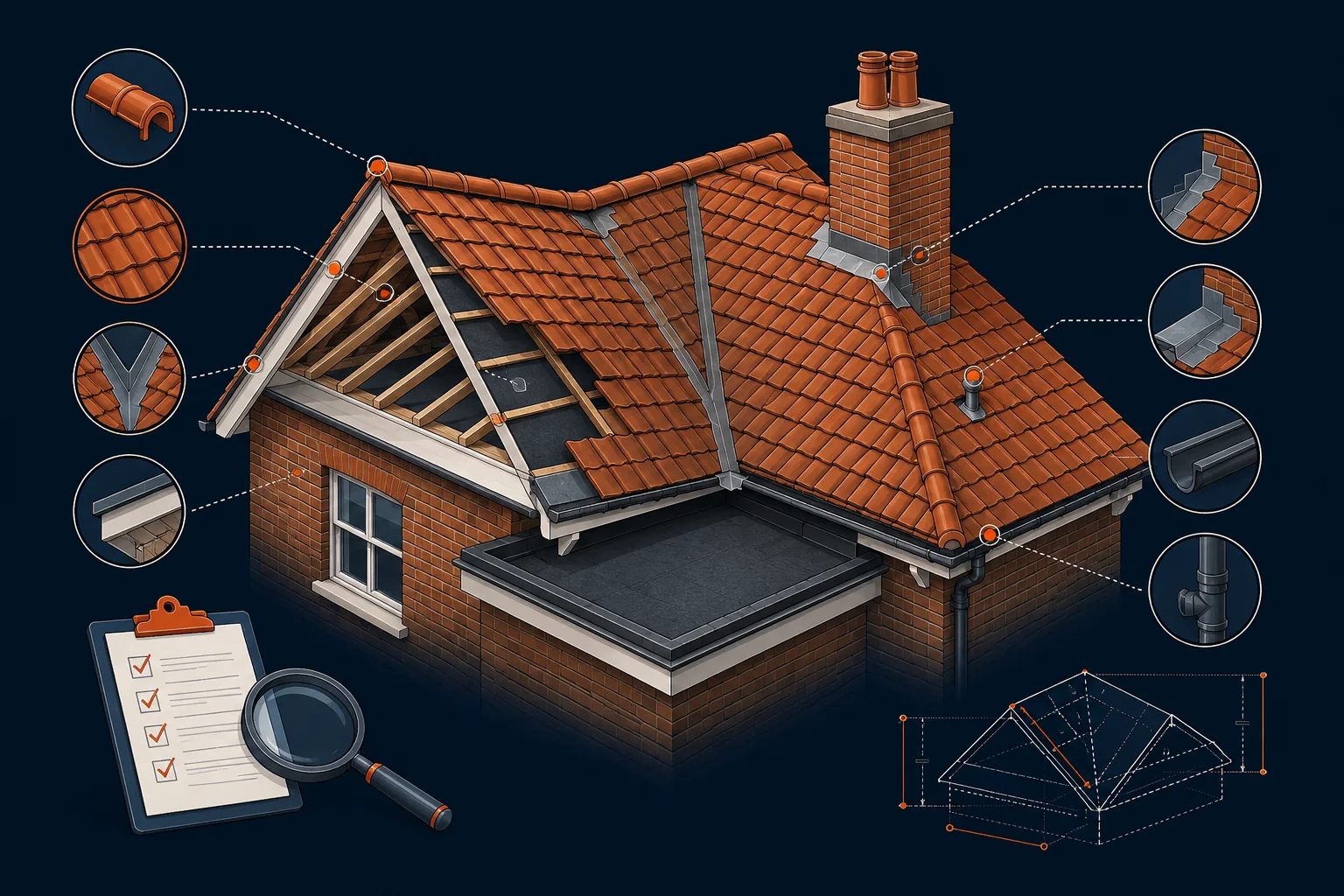
How We Assess Chimney Repairs
The visible symptom is considered alongside the condition of the surrounding roof.
Inspect before specifying the work
We assess chimney faults where a stack meets the roof in Worcester and Worcestershire.
The masonry, flaunching, pots, pointing and surrounding weathering must be considered together.
Safe access, materials and related roof details are considered before the proposed work is set out.
What guides the quotation
The scope should match the condition found rather than a predetermined solution.
Assessment focus
- Inspect the complete stack
- Check the roof junction
- Match the work to the fault
Written scope
- Visible condition
- Safe access
- Material specification
- Relevant exclusions
What Chimney Repairs Can Cover
A chimney leak can begin in the stack, flaunching, pots, pointing or the weatherproof junction where the masonry passes through the roof. The visible damp mark alone does not identify which detail has failed.
We assess the masonry and roof junction together before recommending chimney flashing work, chimney repointing, capping, local rebuilding or more extensive chimney repair. The condition found determines how far the work needs to go.
This joined-up approach avoids repairing loose mortar while overlooking a separate water route beside it. The written quotation explains the fault being addressed, the access required and why the proposed chimney work is proportionate.
- Masonry, mortar joints, pots and flaunching are considered as parts of one exposed structure.
- The flashing and roof-to-stack junction are checked for a controlled route away from water.
- Local repair, capping or rebuilding is matched to the actual extent of deterioration.
Common Chimney Faults
Open mortar joints, cracked flaunching, loose pots and weathered masonry can allow water into the stack.
Movement or deterioration can also affect the junction between the chimney and roof covering.
Because a chimney is exposed on every side, several small defects can combine to create one visible problem inside the property.
- Open joints, cracked bricks or weathered masonry faces
- Loose pots or deteriorated flaunching around the chimney top
- Movement at the junction between the stack and roof covering
Chimney Flashing and Flaunching
Chimney flashing forms the weathered junction at roof level.
It should be assessed with the stack and the adjoining roof covering.
Flaunching is the mortar around the chimney pots that sheds water from the top of the stack.
These details perform different jobs: flashing manages the roof junction, while flaunching supports chimney pots and sheds water from the top of the stack.
- Step and cover flashing seated securely into the masonry
- Flaunching formed with suitable falls and without open cracking
- Sound interfaces between the stack, tiles or slates and surrounding mortar
Tracing a Chimney Leak
Wind-driven rain can enter through masonry, pointing, flaunching or flashing.
Internal staining alone does not identify which part has failed.
If the route is unclear, roof leak tracing can follow how water may be travelling.
A stain near a chimney does not automatically mean the flashing has failed; the stack, top and internal water route all need to be compared.
- Direction and severity of rainfall when the symptom appears
- Moisture route through the stack, roof space or adjoining timbers
- Condition of masonry, flaunching and the roof-to-chimney junction
Repointing, Capping or Rebuilding
Local chimney repointing may be suitable when the masonry remains stable.
More extensive deterioration may require partial rebuilding or an appropriate cap.
For mortar repairs elsewhere on the roof, see roof repointing.
The appropriate response should be proportionate to the stability and intended use of the stack, not chosen from appearance alone.
- Local repointing where bricks remain stable and joints have weathered
- Capping or ventilation arrangements for a redundant chimney
- Partial or full rebuilding where movement or masonry failure is extensive
A Chimney Repair Scope Based on Its Condition
Condition
The visible fault, any water ingress and the condition found beneath accessible coverings.
Access
Roof height, pitch and whether suitable access or scaffolding is required and confirmed for the work.
Specification
Material choice, matching availability, roof area and relevant building regulations or British Standards.
Chimney Repairs FAQs
Failed flashing, open pointing, cracked flaunching or porous masonry can all admit water.
It is the shaped mortar around chimney pots that secures them and sheds rainwater.
A local repair may be possible, but split, poorly detailed or widely failed flashing may need replacement.
Rebuilding may be considered when masonry is unstable or deterioration is too extensive for local repair.
Ask about chimney repairs
Tell us what you can see and where the property is.
The form is for planned roofing enquiries in Worcester and nearby Worcestershire towns.