Roof Valley Repairs Worcester
Lead, GRP and tiled valleys inspected as drainage channels
Roof Valley Repairs for Worcester Properties
We assess roof valley faults in Worcester and Worcestershire.
A valley carries concentrated rainwater where two roof slopes meet.
The roof and the relevant surrounding details are inspected where access allows.
The proposed work is then set out in a written quotation.
Valleys are considered as part of the wider work handled by our roofing specialists in Worcester.
Roof Valley Repair Topics at a Glance
- Roof survey and visible-condition check
- Clear explanation of the likely cause
- Appropriate material and access considerations
- Written quotation for the proposed scope
How We Assess a Roof Valley
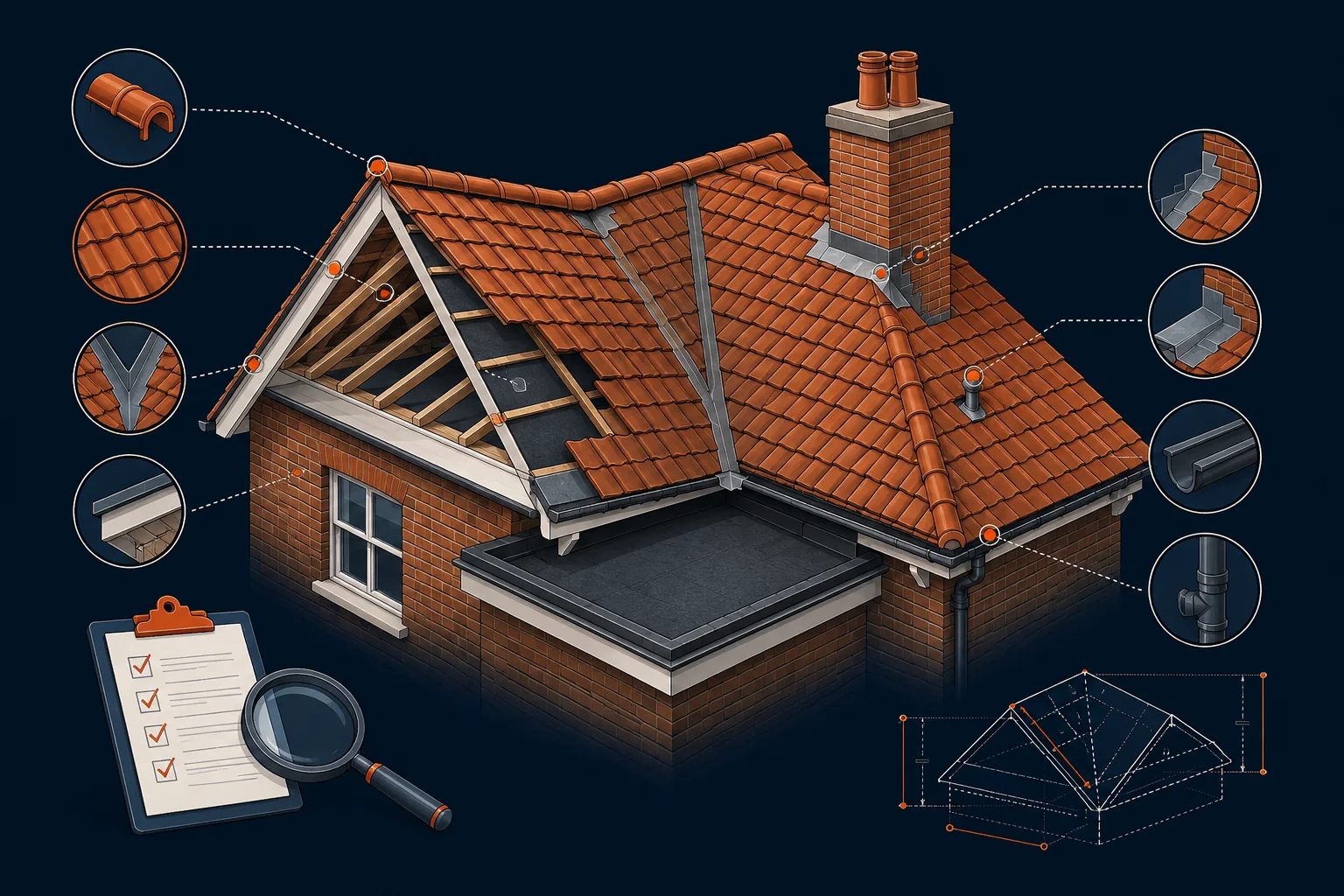
The visible symptom is considered alongside the condition of the surrounding roof.
Inspect before specifying the work
We assess roof valley faults in Worcester and Worcestershire.
A valley carries concentrated rainwater where two roof slopes meet.
Safe access, materials and related roof details are considered before the proposed work is set out.
What guides the quotation
The scope should match the condition found rather than a predetermined solution.
Assessment focus
- Clear the drainage route
- Inspect the valley lining
- Check the side details
Written scope
- Visible condition
- Safe access
- Material specification
- Relevant exclusions
Roof Valley Types, Leaks and Repairs
A roof valley carries concentrated rainwater from adjoining slopes, so even a small obstruction, split or poorly formed junction can lead to water backing up beneath the covering.
We identify the roof valley type and inspect its lining, width, fall, surrounding tiles and discharge point. Lead valleys, GRP valleys and other formed systems each require a repair that preserves a clear and reliable water route.
Looking at the complete drainage detail shows whether a local roof valley repair is credible or whether part of the lining needs renewal. The written quotation explains the cause found and the work needed to restore dependable drainage.
- The valley channel, lining and side junctions are checked as one drainage detail.
- Lead, GRP and tiled valleys require different repair methods and compatible materials.
- The proposed work should address the water route rather than covering only the visible symptom.
What a Roof Valley Does
The valley forms a drainage channel between adjoining roof slopes.
Its lining and side details must carry water towards the gutter without allowing it beneath the covering.
A valley carries a concentrated volume of water, making clear falls, firm support and unobstructed discharge particularly important. Even a sound lining can perform poorly if the channel is restricted or its sides are incorrectly formed.
- A continuous channel directing water towards the gutter
- Stable support beneath the selected valley lining
- Watertight side junctions with the adjoining roof covering
Lead, GRP and Tiled Valleys
Lead valleys use sheet lead formed with suitable laps and movement allowances.
GRP valleys use manufactured fibreglass channels.
Some roofs use purpose-made valley tiles.
Each system has its own support, lap and side-detail requirements, so materials should not be substituted without considering the complete build-up. The selected system also needs to continue cleanly through outlets and roof junctions.
- Lead valleys formed in suitable bays with controlled laps
- GRP units installed to the relevant proprietary detail
- Tiled or purpose-made valleys laid with clear water channels
Why Roof Valleys Leak
Split lining, blocked channels, failed side mortar or displaced tiles can interrupt drainage.
Debris can hold moisture and redirect water beneath otherwise sound details.
The visible wet area may sit below the actual defect because water can travel along the valley edge or beneath adjacent tiles before appearing indoors. Checking the whole flow path helps avoid repeated patch repairs.
- Debris restricting flow or holding moisture within the channel
- Split, punctured or poorly supported valley lining
- Open side joints, displaced tiles or failed edge mortar
Roof Valley Repair
A local repair may be possible when damage is confined and the surrounding details remain sound.
If the water route remains unclear, roof leak tracing can help connect the internal symptom with the external fault.
For leadwork away from the valley channel, review lead flashing and general roof leadwork.
The repair should restore both the channel and its junctions, with the extent based on the condition of the surrounding lining and roof covering.
- Clean and correct a sound channel with a limited local defect
- Renew a failed length of lining with compatible support and laps
- Reset side tiles or mortar details so water remains within the valley
A Written Plan for Valley Repairs
Condition
The visible fault, any water ingress and the condition found beneath accessible coverings.
Access
Roof height, pitch and whether suitable access or scaffolding is required and confirmed for the work.
Specification
Material choice, matching availability, roof area and relevant building regulations or British Standards.
Roof Valley Repairs FAQs
It is the drainage channel formed where two roof slopes meet.
Leaves, moss and roof debris can collect where water is concentrated.
A local repair may be possible, but splits, fatigue or poor detailing can require renewal.
It is a manufactured fibreglass channel used to line the meeting point between roof slopes.
Ask about roof valley repairs
Tell us what you can see and where the property is.
The form is for planned roofing enquiries in Worcester and nearby Worcestershire towns.